Police Academy Driving: How to Prepare for EVOC Before You Touch the Lights and Siren
Oct 07, 2026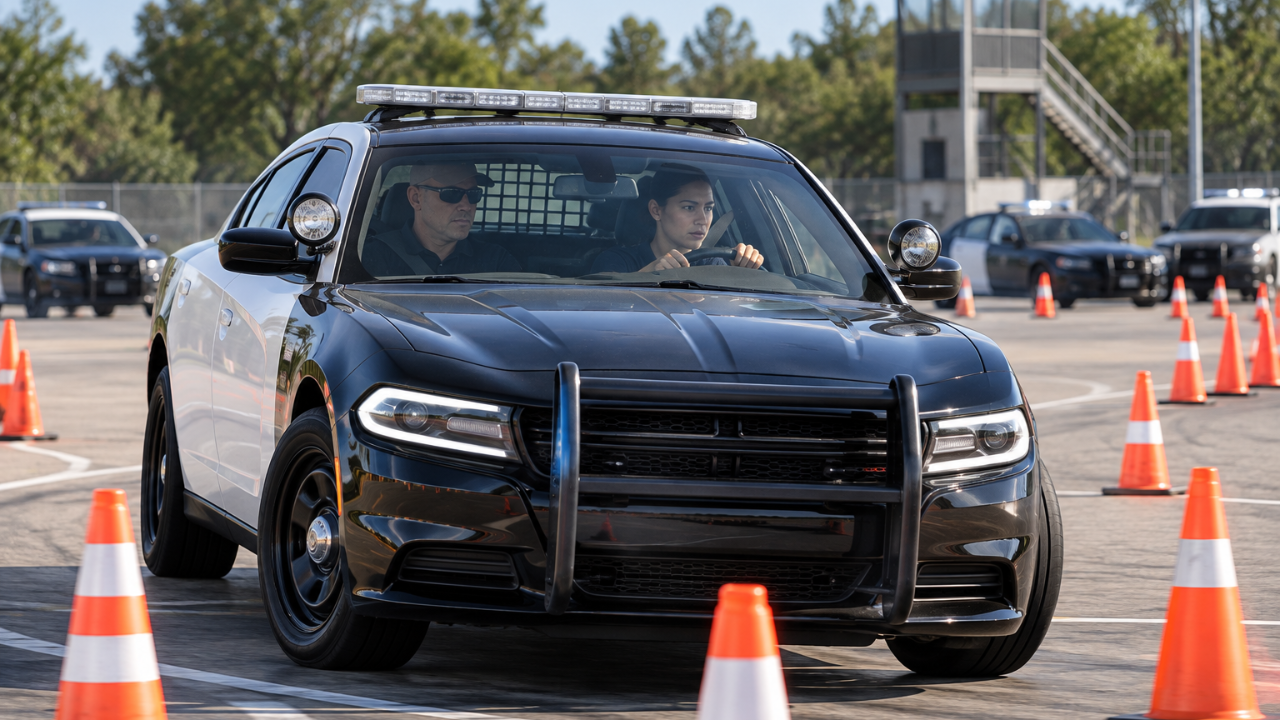
Driving a car every day doesn't automatically mean you're ready to drive like a police officer. Emergency Vehicle Operations Course (EVOC) training can introduce recruits to vehicle control, judgment, braking, cornering, and decision-making in situations far removed from an ordinary commute. The surprising part? Some of your best preparation can begin before you ever enter the course.
Think of driving skill like handwriting. After years of repetition, many movements become automatic—but that also means bad habits can become automatic. EVOC training may require you to examine those habits and replace them with deliberate techniques. You shouldn't try to teach yourself emergency maneuvers on public roads, but you can start developing the observation, smoothness, and discipline that make advanced driver training easier to absorb.
1. Break Your Everyday Bad Driving Habits
Before worrying about advanced driving, take a closer look at the basics.
Do you follow vehicles too closely? Brake late? Accelerate aggressively? Let your attention wander at intersections? Drive with one hand because it feels comfortable? Small habits that seem harmless during an ordinary commute can become bigger problems when you're learning professional vehicle operation.
Start treating normal driving as an opportunity to improve smoothness and awareness. Leave appropriate following distance, anticipate stops, scan ahead, and avoid unnecessary distractions. Your goal isn't to imitate emergency driving. It's to build disciplined fundamentals.
Research into traffic safety consistently identifies speeding, distraction, and other risky driving behaviors as contributors to serious crashes. For a future officer, eliminating careless habits early is simply smart preparation.
Tip: During normal driving, periodically evaluate three things: following distance, scanning habits, and how smoothly you're braking.
Example: Instead of waiting until the vehicle ahead brakes before reacting, practice looking farther down the roadway for traffic lights, congestion, pedestrians, and other developing conditions.
“The will to succeed is important, but what's more important is the will to prepare.” — Bobby Knight
2. Train Your Eyes to Stay Ahead of the Vehicle
Good driving isn't just about what your hands and feet are doing. Your eyes are constantly feeding information to your brain.
A common mistake is focusing too narrowly on what's immediately in front of the vehicle. Better awareness means scanning farther ahead while still monitoring mirrors, intersections, pedestrians, cyclists, surrounding traffic, and potential hazards.
This matters because perception and reaction take time. The earlier you recognize a developing problem, the more time you have to make a controlled decision.
Don't turn this into an obsessive scanning routine that distracts you from driving. Instead, practice keeping your attention active and your vision broad.
Tip: Get into the habit of looking beyond the vehicle directly ahead and identifying potential changes in traffic before they reach you.
Example: If you notice brake lights several vehicles ahead, you can begin adjusting sooner rather than waiting for the car directly in front of you to suddenly slow down.
“The expectations of life depend upon diligence; the mechanic that would perfect his work must first sharpen his tools.” — Confucius
3. Learn Control Before You Chase Speed
The exciting image of police driving involves lights, sirens, sharp turns, and speed. EVOC training, however, isn't an invitation to practice those things on your own.
Never attempt pursuit techniques, high-speed cornering, emergency maneuvers, or academy driving exercises on public roads. Those skills belong in authorized training environments under qualified instruction.
What you can develop beforehand is patience. Smooth steering, progressive braking, attention to road conditions, and following traffic laws create a much better foundation than trying to prove you're already a “fast driver.”
EVOC is ultimately about operating a vehicle with control and judgment. Speed without either one isn't a skill.
Tip: Arrive at EVOC ready to learn from scratch. Don't let years of ordinary driving convince you that you already know the techniques instructors are there to teach.
Example: A recruit who immediately tries to complete an exercise as fast as possible may sacrifice accuracy and control. Learning the correct technique first gives speed somewhere safer to develop from.
“Slow is smooth, and smooth is fast.” — Common training maxim
Final Word
Preparing for police driving doesn't mean pretending you're already operating an emergency vehicle. It means strengthening the habits underneath advanced driving: observation, patience, smooth control, and disciplined decision-making.
Clean up everyday driving habits. Train yourself to recognize developing hazards earlier. Most importantly, save emergency techniques for qualified instructors and controlled training environments.
When EVOC day arrives, don't show up determined to prove how fast you can drive. Show up ready to prove how well you can learn. In police driving, control and judgment aren't obstacles to performance—they're the foundation of it.
Have a Question or Need Help?
Use the form below to reach out with any questions about our programs, services, or support. We’ll get back to you as soon as possible.
We hate SPAM. We will never sell your information, for any reason.