Police Academy Teamwork: Why the Strongest Recruit Isn’t Always the Best Teammate
Sep 09, 2026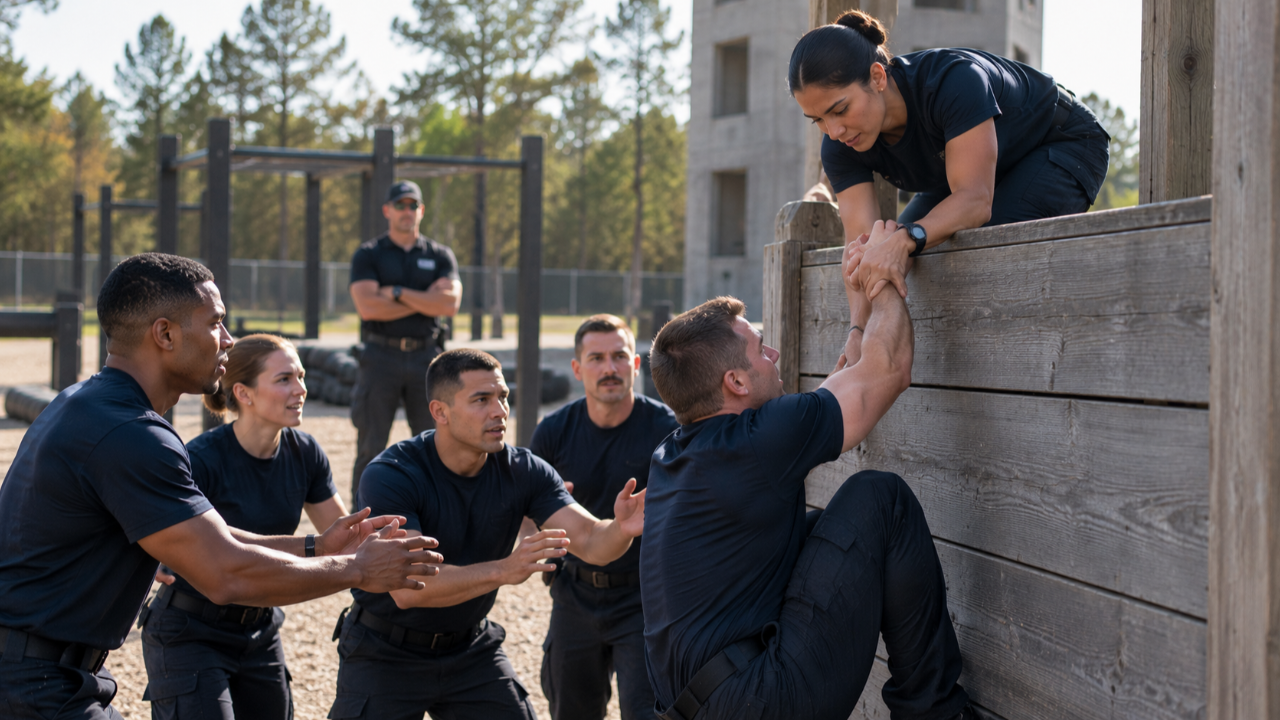
You can run the fastest mile, ace every written test, and still struggle in the police academy if nobody can rely on you. Law enforcement isn’t an individual sport. From academy training to patrol, your ability to communicate, contribute, and support the people beside you matters.
Think of an academy class like a rowing crew. One person pulling harder than everyone else doesn’t guarantee the boat moves faster. Everyone has to work together, keep pace, and move in the same direction. Building that mindset before day one can help you become the kind of recruit classmates—and eventually fellow officers—want beside them when things get difficult.
1. Stop Competing With Everyone in the Room
A little competition can push you to improve, but treating every classmate like an opponent can quickly backfire. Your academy classmates may become the people you depend on during difficult training exercises and, later, on the street.
Instead of obsessing over who runs faster or scores higher, concentrate on raising your own standard while helping the group improve. Share useful study habits. Encourage someone who's struggling during conditioning. Accept help when another recruit understands something better than you do.
That doesn't mean lowering your standards. Quite the opposite. Strong teams create accountability, and accountability can push everyone to perform better.
Tip: Find at least one way each week to help another recruit improve without expecting anything in return.
Example: If you're confident with legal terminology but your classmate excels at fitness, studying together and training together allows both of you to strengthen a weakness instead of guarding your strengths.
“Talent wins games, but teamwork and intelligence win championships.” — Michael Jordan
2. Be the Person Who Can Be Counted On
Teamwork isn't built through motivational speeches. It's built through hundreds of small actions.
Arriving on time, bringing required equipment, completing assignments, following instructions, and doing your share during group tasks may sound basic. That's precisely why they matter. When someone repeatedly forgets gear or fails to prepare, other people often have to absorb the consequences.
Reliability also means keeping your attitude under control when you're tired or frustrated. Police work requires people to function together when circumstances aren't comfortable, and academy training gives you an early opportunity to develop that habit.
Tip: Before leaving each evening, prepare everything you'll need for the following day rather than trusting your tired morning brain to remember it.
Example: During a group exercise, one unprepared recruit can slow down an entire team. A recruit who consistently arrives ready removes that problem before it starts.
“The strength of the team is each individual member. The strength of each member is the team.” — Phil Jackson
3. Learn to Give—and Receive—Correction
Here's where teamwork gets uncomfortable: sometimes your teammate will notice a mistake before you do.
Good recruits don't automatically treat correction as an insult. They listen, determine whether the feedback is valid, and make the adjustment. At the same time, correcting someone else requires judgment. There's a major difference between helping a classmate improve and trying to embarrass them.
Learning to exchange feedback professionally prepares you for a career where supervisors, training officers, instructors, and fellow officers may all point out things you need to improve.
Tip: When receiving legitimate correction, replace the instinct to defend yourself with three steps: listen, acknowledge, adjust.
Example: If a teammate notices that you're repeatedly missing a step during a training drill, fixing the problem is more valuable than arguing about who noticed it first.
“None of us is as smart as all of us.” — Ken Blanchard
Final Word
Police academy teamwork isn't about becoming best friends with everyone in your class. It's about becoming dependable.
Work hard without making everything a competition. Show up prepared. Help others improve. Accept correction without letting your ego take over. Those habits can make you a stronger academy recruit, but their real value comes later.
Someday, another officer may need to know that when the pressure rises, you'll do your job and support the team. Start becoming that person before the badge ever reaches your chest.
Have a Question or Need Help?
Use the form below to reach out with any questions about our programs, services, or support. We’ll get back to you as soon as possible.
We hate SPAM. We will never sell your information, for any reason.