Police Courtroom Testimony: How to Build Confidence Before You Take the Stand
Oct 21, 2026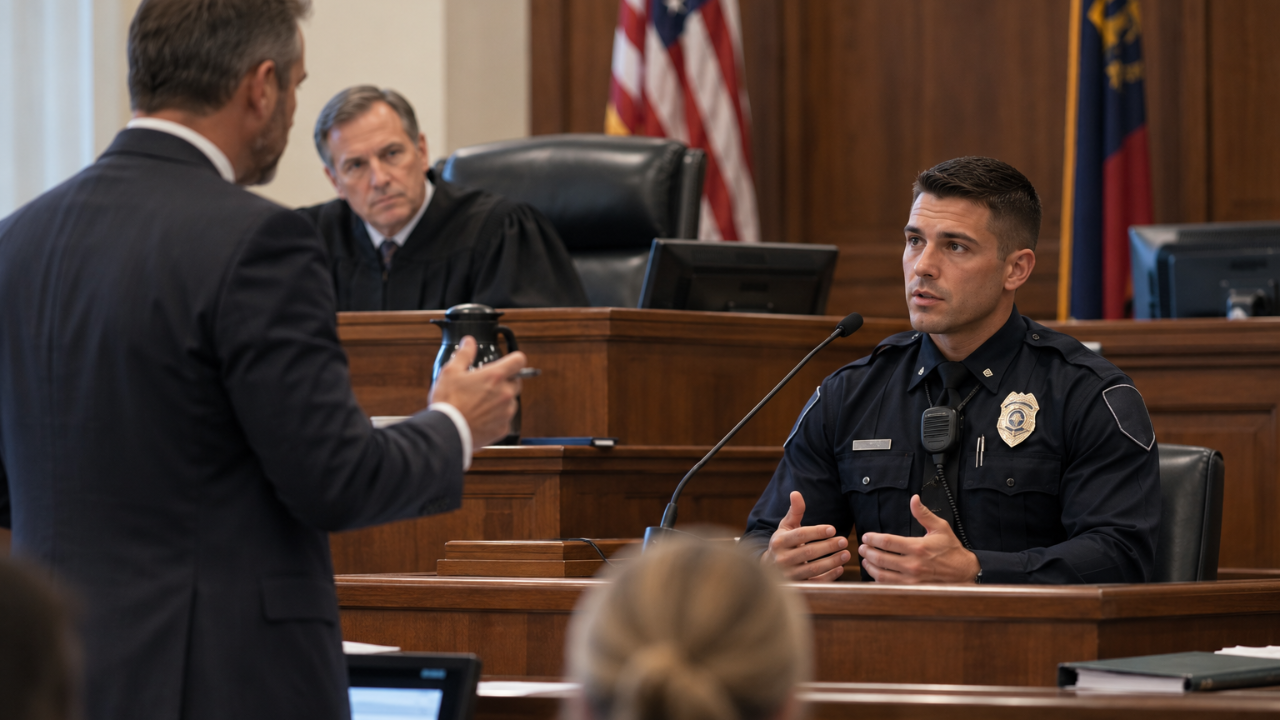
You might spend months preparing for the police academy, learning criminal law, improving your fitness, and practicing tactical skills. But there's one moment many future officers rarely think about: sitting in a courtroom, raising their right hand, and answering questions under oath. Suddenly, every detail matters, and your ability to communicate clearly can become just as important as the work you performed in the field.
Think of courtroom testimony like the final chapter of a book. Everything that happened during an investigation leads to this moment, but if the story is confusing, incomplete, or inaccurate, the reader may struggle to understand what actually occurred. A police officer's responsibility isn't to tell the most convincing story. It's to provide truthful, accurate testimony that helps the court understand the facts. Developing those habits early can prepare you for one of the most important responsibilities of law enforcement.
1. Learn to Explain What Happened Without Adding What Didn't
Here's something that surprises many future officers: effective courtroom testimony isn't about sounding impressive. It's about being accurate.
When officers testify, they may be asked to explain their observations, actions, decisions, and documentation. The challenge is communicating those facts without exaggeration, speculation, or unnecessary details.
For example, there's a meaningful difference between saying, "The individual appeared nervous," and explaining the specific behavior you observed, such as trembling hands or repeatedly looking toward an exit. The second statement gives the court concrete information rather than relying entirely on your interpretation.
The same principle applies when describing an incident. Separate what you personally observed from what another person reported. Avoid presenting assumptions as established facts, and never fill gaps in your memory with guesses.
Research on eyewitness memory has repeatedly demonstrated that human recollection is imperfect and can be influenced by time and subsequent information. That's one reason accurate documentation and careful testimony matter so much.
Tip: Practice describing everyday events using only what you directly observed. Separate facts, interpretations, and information received from others.
Example: Instead of saying, "The driver was trying to escape," you might explain, "I observed the vehicle accelerate away from the intersection after I activated my emergency lights." The observation is specific without claiming knowledge of the driver's intentions.
"Facts are stubborn things." — John Adams
2. Stay Composed When the Questions Get Difficult
Imagine answering a question confidently, only to have an attorney challenge your explanation. Your heart rate increases, your thoughts start racing, and suddenly you feel the urge to defend yourself.
This is where emotional control becomes essential.
Courtroom questioning can be challenging, particularly during cross-examination. Attorneys may ask detailed questions about an officer's observations, decisions, memory, or written reports. The purpose of testimony isn't to win an argument with an attorney. It's to answer questions truthfully and professionally.
Future officers can prepare by developing the habit of listening carefully before responding. Allow the question to finish, consider what is being asked, and provide a direct answer. If you don't understand a question, ask for clarification rather than guessing.
It's equally important to recognize that saying "I don't remember" or "I don't know" can be appropriate when those statements are true. Confidence doesn't mean pretending to have an answer for everything.
Studies of communication and cognitive performance show that stress can interfere with attention and working memory. Practicing under realistic but controlled conditions can help you become more comfortable communicating when the pressure rises.
Tip: Ask a friend or study partner to conduct a mock question-and-answer session. Practice listening fully, pausing briefly, and responding without becoming defensive.
Example: If you're asked why you made a particular observation but cannot recall the exact detail, acknowledge the limitation rather than inventing an explanation to make your answer sound stronger.
"The most important thing in communication is hearing what isn't said." — Peter Drucker
3. Understand Why Good Notes Make Better Testimony
Your memory isn't a recording device. Days, weeks, or even months may pass between an incident and a court appearance. By then, remembering every detail without reliable documentation can be difficult.
That's why accurate police reports and contemporaneous notes are so important.
Strong documentation records relevant observations, actions, statements, and timelines while the information is still relatively fresh. It also helps officers distinguish what they remember independently from what they documented at the time.
However, writing a report doesn't mean an officer can simply read it aloud as testimony. Rules about using notes or reports to refresh recollection vary depending on the jurisdiction and circumstances. Officers must follow applicable evidence rules, court procedures, and agency guidance.
For future recruits, the lesson is straightforward: treat note-taking and report writing as essential professional skills, not paperwork to rush through at the end of a long day.
Tip: During training exercises, practice writing a short factual account immediately afterward. Then review it later to identify missing details, unclear wording, or assumptions.
Example: After a mock scenario, record the sequence of events, your observations, and the actions taken. A week later, compare what you independently remember with what you documented to see why timely notes matter.
"The palest ink is better than the best memory." — Traditional proverb
Final Word
Courtroom testimony may seem far away when you're just beginning your journey toward becoming a police officer, but the skills behind it are worth developing now.
Learn to distinguish facts from assumptions. Practice staying calm when someone questions your decisions. Build strong documentation habits that support accurate recollection. Above all, remember that credibility comes from honesty and consistency—not from sounding perfect.
A confident police officer isn't someone who always has the answer. It's someone who can explain what they know, acknowledge what they don't, and remain professional when the questions become difficult.
Start practicing those habits today. Someday, your ability to communicate the truth clearly may be just as important as your ability to recognize it in the field.
Have a Question or Need Help?
Use the form below to reach out with any questions about our programs, services, or support. We’ll get back to you as soon as possible.
We hate SPAM. We will never sell your information, for any reason.