Police Polygraph Prep: How to Walk In Calm, Honest, and Ready
Sep 02, 2026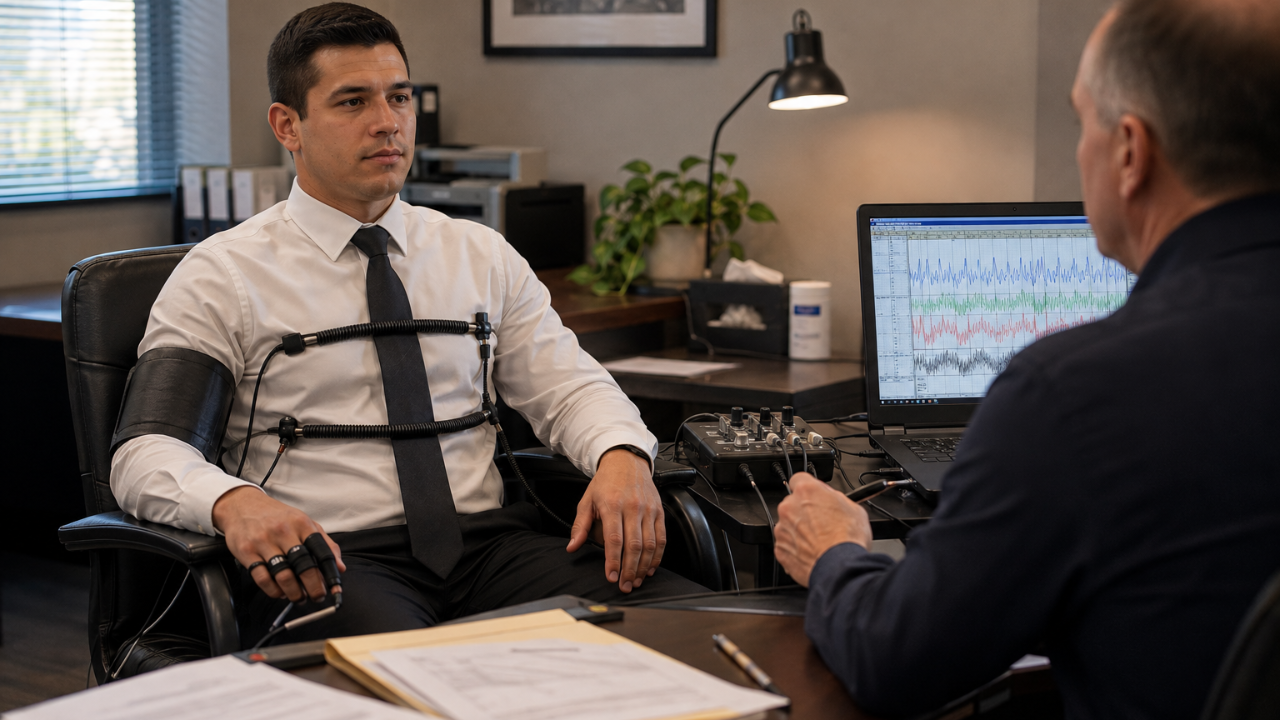
Few steps in the police hiring process generate as much nervous energy as the polygraph. Even candidates who intend to tell the truth can start second-guessing themselves: What if I'm nervous? What if I forget something? What if they think I'm hiding something? The best preparation isn't learning tricks—it's getting organized and committing to honesty.
Think of the polygraph process like driving through a checkpoint with everything already in order. If you've reviewed your history, followed instructions, and decided to answer truthfully, there's far less mental clutter competing for your attention. Procedures vary between agencies, but preparation should always center on accuracy, composure, and cooperation—not trying to manipulate the examination.
1. Know Your Own History Before You Walk In
One of the easiest ways to create unnecessary stress is trying to remember important details for the first time while sitting in an examination room. Your hiring paperwork may already cover employment, driving history, finances, drug use, disciplinary issues, and other areas relevant to the agency's background process.
Review the information you've previously submitted when you're permitted to do so. If you discover an honest mistake or omission, follow the agency's instructions for correcting it rather than hoping nobody notices.
Consistency matters, but truthful correction is different from trying to maintain an answer you now know is inaccurate.
Tip: Before your appointment, review your application and personal history paperwork for dates, events, and answers that may require clarification.
Example: Suppose you realize you listed the wrong month for an old job. Don't invent additional details to make the original date work. Ask how the agency wants corrections handled and provide accurate information.
“Honesty is the best policy.” — Benjamin Franklin
2. Don't Try to Outsmart the Examination
The internet is packed with supposed tricks for “beating” polygraphs. That's precisely the rabbit hole a serious police candidate should avoid.
Trying to manipulate an examination conflicts with the qualities agencies are attempting to evaluate during the hiring process. Instead, listen carefully to the examiner's instructions, ask for clarification when you genuinely don't understand something, and answer questions truthfully.
Also remember that agencies can use different screening procedures and standards. Your responsibility isn't to reverse-engineer the process. It's to participate professionally.
Tip: Stay away from countermeasure advice and focus your preparation on understanding your own history and following the examiner's directions.
Example: If a question seems unclear, asking the examiner to explain what is being asked is more professional than guessing what you think the “best” answer should be.
“Integrity is doing the right thing, even when no one is watching.” — Commonly attributed to C. S. Lewis
3. Manage Nervousness Without Fighting It
Being nervous about an important hiring step is hardly unusual. Trying desperately to force yourself to feel completely relaxed can actually give you one more thing to worry about.
Instead, control the basics. Get appropriate sleep, arrive with enough time to avoid rushing, bring whatever documentation you've been instructed to bring, and follow any pre-examination directions provided by the agency or examiner.
During the process, listen to the question being asked rather than mentally racing ahead to the next one. Your goal isn't to look perfectly relaxed. Your goal is to remain attentive, cooperative, and truthful.
Tip: Give yourself extra time on appointment day so traffic, parking, or a forgotten document doesn't create avoidable stress before you even begin.
Example: Psychological research has consistently linked acute stress with changes in attention and working memory, which is another reason to simplify your morning and avoid unnecessary last-minute pressure.
“Nothing diminishes anxiety faster than action.” — Walter Anderson
Final Word
Preparing for a police polygraph should be refreshingly straightforward: know your history, tell the truth, follow instructions, and don't play games with the process.
You don't need to manufacture the image of a flawless candidate. If something in your history needs explaining, address it accurately and take responsibility for it. A career in law enforcement places enormous weight on integrity, and your hiring process is an opportunity to start demonstrating that standard before you ever wear the uniform.
Have a Question or Need Help?
Use the form below to reach out with any questions about our programs, services, or support. We’ll get back to you as soon as possible.
We hate SPAM. We will never sell your information, for any reason.